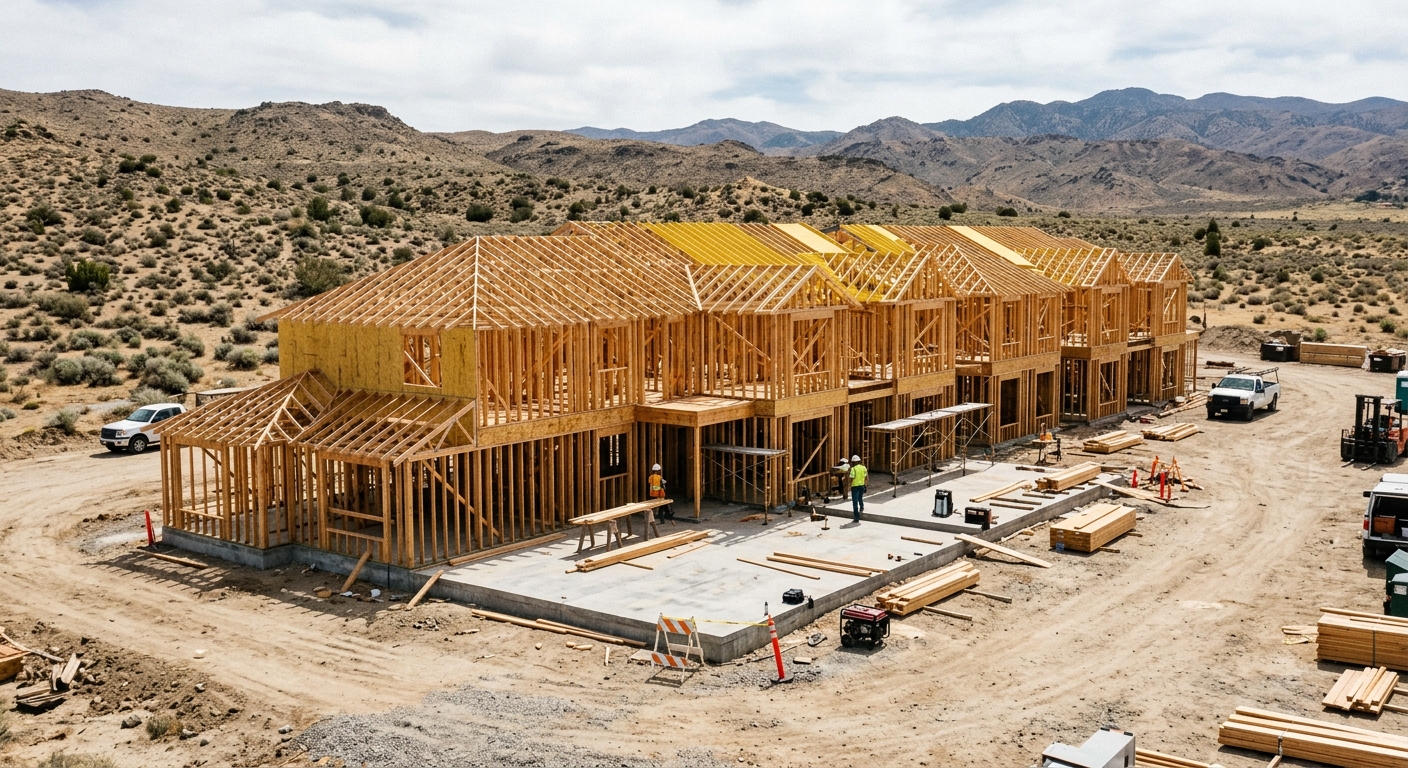
AI-generated illustration; not a photograph of the reported event.
- calendar_today September 24, 2026
Nevada, renowned for its own housing challenges, is closely following recent developments in affordable housing as Connecticut commits nearly $10.4 million in state tax credits to spur the creation of over 450 affordable homes and apartments. Distributed by the Connecticut Housing Finance Authority (CHFA), this funding will support 24 nonprofit-led projects across 15 municipalities, highlighting strategies that may offer valuable lessons for regions like Nevada.
Connecticut’s Major Affordable Housing Investment
The allocation of state tax credits represents a significant investment in affordable housing amid increasing demand. With initiatives ranging from historic site rehabilitation to the construction of new apartments in cities such as Bridgeport, Norwalk, Sharon, and Middletown, the focus remains on increasing housing development opportunities for very low-, low-, and moderate-income residents. The projects are at various stages, with several poised to break ground in the next six months.
The HTCC Program: A Flexible Tool for Housing Nonprofits
Since its inception in 1987, the State Housing Tax Credit Contribution (HTCC) Program has played a pivotal role in connecticut housing efforts, enabling the creation, preservation, and rehabilitation of more than 12,000 units since 2010. The HTCC program stands out for its flexibility, supporting unique housing types such as owner-occupied multifamily homes and supportive housing for formerly homeless individuals. This adaptability is crucial for regions with diverse community needs, such as Nevada’s rapidly changing housing landscape.
Addressing Funding Challenges and Rising Demand
This year, 37 projects sought HTCC support, submitting requests totaling $16 million in housing funding. Despite the higher demand, limited resources meant that only 24 projects could be funded. Speaking on the funding constraints, CHFA’s CEO emphasized Connecticut’s complex housing landscape and the necessity of adaptable programs. This situation resonates with housing nonprofits and policymakers in Nevada, where rising housing costs and growing populations continue to test available resources.
Ensuring Accountability and Effective Use of State Tax Credits
To guarantee the impact and integrity of these initiatives, CHFA requires quarterly reporting from awarded organizations. This oversight helps ensure the proper use of state tax credits and adherence to project timelines—an approach being studied by Nevada stakeholders evaluating improvements to local housing preservation programs. Connectivity between funders, builders, and communities remains a central tenet of successful affordable housing development nationwide.
Homeownership Assistance and Long-Term Housing Preservation
Many of the funded projects in Connecticut incorporate homeownership assistance and emphasize long-term affordability. By supporting permanent supportive housing and low income housing options, the HTCC program helps address needs across the housing spectrum. Such strategies align with recommendations for Nevada, where both rental and homeownership assistance are essential to maintain diverse, stable communities.
Lessons for Regions Like Nevada
The ongoing initiatives in Connecticut highlight the value of strategic public-private partnerships and targeted use of housing development resources. As Nevada explores new solutions for its own housing challenges, programs like the HTCC offer frameworks for leveraging housing funding, encouraging collaboration with housing nonprofits, and securing lasting community impacts. Effective oversight and adaptation to local needs remain key to addressing the affordable housing shortage both in Nevada and beyond.