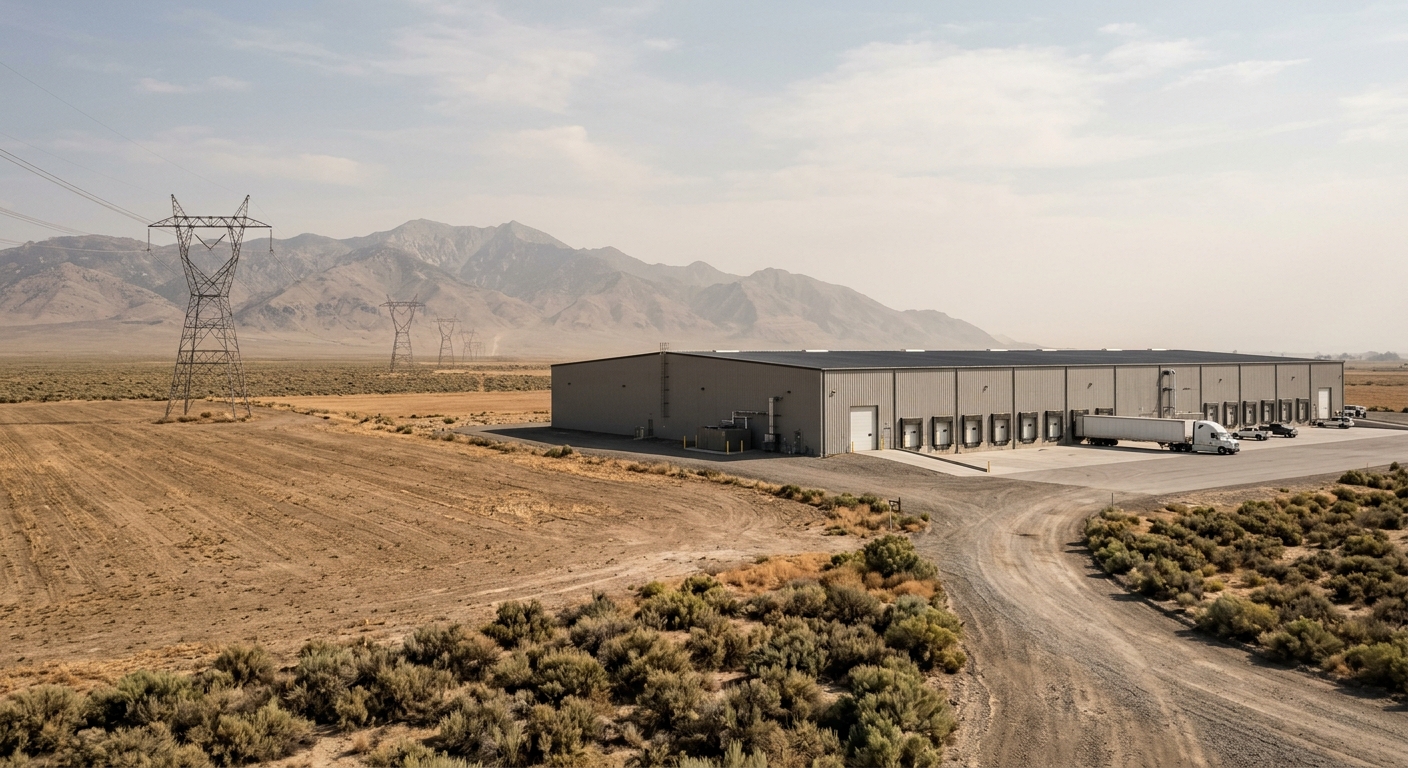
AI-generated illustration; not a photograph of the reported event.
- calendar_today October 27, 2026
Debate Intensifies Over Data Centers in Nevada's Rural Communities
The ongoing debate regarding the placement of data centers in Nevada has grown in intensity, particularly in the last year. Residents from across the state have come together to oppose the construction of these facilities in both neighborhoods and urban areas, raising pointed questions about where data centers truly belong.
Lyon County's Approval Sparks New Questions
This debate came to the forefront when the Lyon County Board of Commissioners approved the advancement of a proposal for the Monarch Data Center. The project would use 500 acres of agricultural land on the outskirts of the county seat. This decision has triggered a new wave of discussion about the appropriateness of siting data centers in rural or agricultural areas. During a public meeting in August, resident David Janakos told commissioners, "We don't want a data center here. Our locality of Yerington has been assigned a project that we never asked for."
The Shift to Rural Areas
Historically, Nevada’s data centers have been located in industrial zones. However, recent research reveals a shift: over two-thirds of nearly 1,500 planned data centers nationwide are slated for rural areas. Notably, nearly 40 percent of planned data centers are in counties without any existing facilities, a trend driven by the search for new development sites.
Economic Impact: An Incentive for Local Governments
For financially struggling counties, the revenue generated by industrial properties such as data centers can be significant. Andrew Haskin, the Lyon County Administrator, highlighted the importance of these tax revenues. Rural counties relying on agricultural property taxes often find their budgets constrained. By contrast, industrial developments can generate not only property taxes, but also sales and use taxes, as well as business license fees.
Doug Busselman, director of government affairs at the Nevada Farm Bureau, described the data center approval on agricultural land as an exception. “There’s no good or bad data center. The important thing is making sure it fits the community,” Busselman said.
Infrastructure Development and Strategic Location
Northern Nevada is now considered a prime location for data center construction. Major infrastructure projects like the Greenlink transmission line, currently being built across Lyon County by NV Energy, have attracted the interest of data center developers. NV Energy is also constructing a high-capacity substation expected to become one of the largest in the world, further incentivizing industrial development in the region.
Fred Steinmann, director of the Center for Economic Development at the University of Nevada, Reno, noted that these factors—available land, access to the power grid, and necessary infrastructure—make rural counties like Lyon attractive to developers.
The Community Debate and Resident Concerns
Despite these potential financial benefits, local opposition remains strong. When Lyon County commissioners moved forward with the Monarch Data Center’s permit, roughly 200 residents attended the meeting, most expressing concerns about water and energy use. NV Energy itself has acknowledged that the current power supply may be insufficient to support a surge in new data centers across Nevada.
Water usage is another sticking point: Data centers nationwide used an estimated 17,430 million gallons of water in 2023, according to a UC Berkeley report prepared for Congress in 2024. The report warned this number could double by 2028. While proponents argue this is less than agricultural usage, the stress on local water supplies remains a concern for many residents.
Agriculture, Economic Shifts, and the Future
Brian Masini, owner of the land identified for the Monarch Data Center, wrote to county officials explaining that local agriculture was becoming economically unsustainable. Masini described increased corporate interest after the announcement of major energy projects, adding, “The traditional way of farming is just no longer economically viable in Mason Valley.”
A Community Divided on Development
Masini’s letter summarized the core tension: on one side, aspirations for economic sustainability, improved schools, hospitals, and recreation; on the other, those simply say "no." This division highlights the ongoing community debate about the right path for rural Nevada as economic and industrial pressures challenge established ways of life.
Source: thenevadaindependent.com.