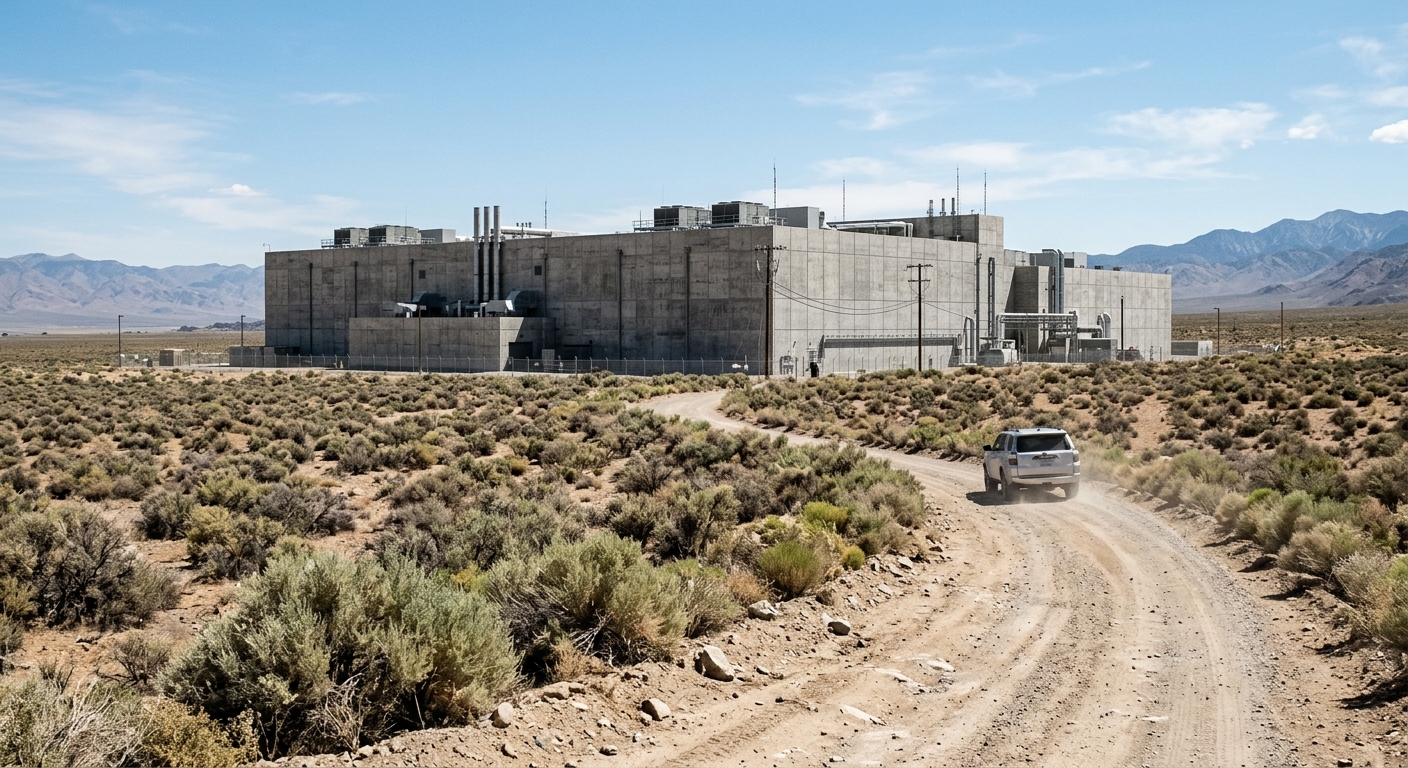
AI-generated illustration; not a photograph of the reported event.
- calendar_today October 15, 2026
AI Data Centers Target Federal Land Near Boulder City
Residents of Boulder City, Nevada, are voicing strong opposition to plans for the development of an artificial intelligence (AI) data center on federal land. After initially defeating a proposal to build the facility within the city through community organizing, residents found themselves sidelined when developers shifted their focus to adjacent federally owned property. The U.S. Bureau of Land Management subsequently approved the project, leaving some locals frustrated and feeling excluded from the decision-making process.
Precedent-Setting Project and Environmental Roadblocks
The Townsite data center, as the project is called, is notable for being the first approved AI data center on federal public land in the United States. However, construction is currently stalled following a court ruling that prohibited reliance on an outdated environmental review originally created for a solar farm at the site. With over a dozen similar projects now in the pipeline nationwide, Townsite could set an influential precedent for infrastructure projects on public lands.
AI Data Centers as a Flashpoint in Nevada's Political Landscape
The growing interest of tech companies in building large-scale data centers—sometimes spanning the equivalent of 70 football fields—has turned the debate into a major issue in Nevada’s governor’s race. With roughly 80% of the state’s land federally owned, the location of these projects has significant political and economic implications.
Republican Governor Joe Lombardo has indicated he does not oppose data centers on public land if local communities are supportive. He recently signed an agreement with the administration of President Donald Trump to streamline infrastructure projects, potentially easing the way for more data centers. Lombardo has also issued an executive order that institutes additional requirements for data centers, including increased taxes to benefit schools.
Democratic nominee Aaron Ford, currently Nevada's attorney general, has taken the opposite stance, pledging to oppose any data centers on public lands and emphasizing the need to prioritize affordable housing. Ford has also called for a pause in new tax abatements for data centers while an audit is conducted on the industry’s real economic benefits.
Broad-Based Community Opposition and Political Fallout
Opposition to the Townsite project unites people across the political spectrum in Boulder City. Residents like Janelle Sorenson and Autumn McGrath-Shook, representing both liberal and conservative viewpoints, report widespread concern over the center’s potential impact on the desert landscape and local wildlife. The debate has caused some voters to reconsider their political affiliations and priorities, with some characterizing data centers as a key issue in state and national elections.
The controversy has also prompted swift political responses elsewhere: Republican Texas Governor Greg Abbott paused data center approvals pending audits, and Pennsylvania's Democratic Governor Josh Shapiro implemented measures granting local authorities a greater voice in data center permitting.
Tax Abatements and Accountability in Focus
The issue of tax abatements for data centers has been contentious in the Nevada governor's race. Lombardo has criticized Ford for co-sponsoring the 2015 legislation that created the state's data center tax incentives, while Ford has accused Lombardo of awarding more than $200 million in such incentives to the industry. Both candidates have pledged to enforce strict state rules, including requirements that data centers cover their own energy costs and protect water supplies, or forfeit tax breaks.
Environmental and Industry Perspectives
Environmental groups, including the Sierra Club’s Toiyabe Chapter, argue that federal public lands should remain protected for public benefit and oppose their use for data center construction. They support legislative measures to strengthen environmental review standards and increase community engagement in project approvals. Industry representatives, meanwhile, say they seek to develop responsibly and be part of discussions about the future of infrastructure on federal land. The broader debate encapsulates Nevada's role in the accelerating global race for AI and the balance between economic development, environmental stewardship, and local control.
Source: thisisreno.com.