- calendar_today August 7, 2025
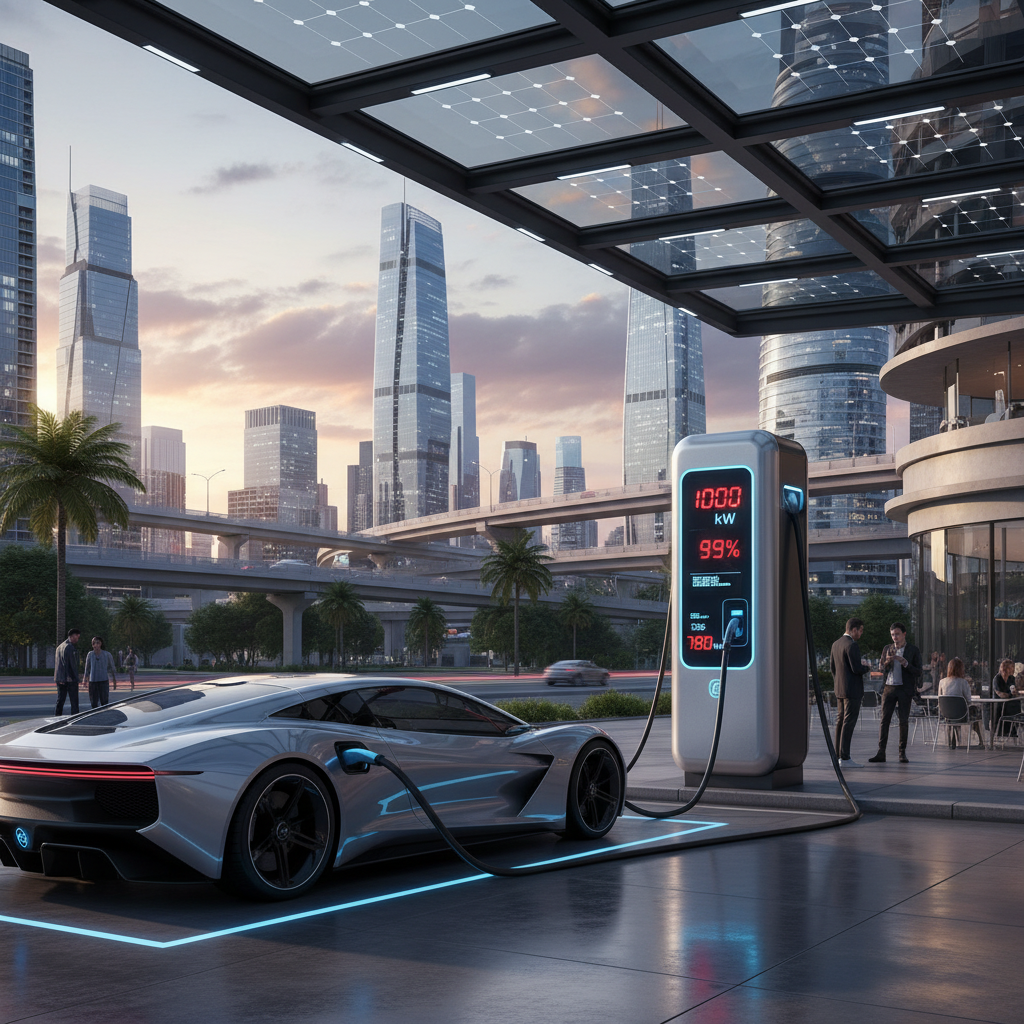
The Chinese automotive leader BYD which now leads global EV sales ahead of Tesla has launched its innovative “super e-platform”. The new system utilizes 10C charging capabilities along with 1,000 kW DC chargers to decrease EV charging times until they nearly match the speed of traditional gas refueling.
BYD’s groundbreaking innovation enables its electric vehicles to achieve an exceptional 249-mile range (400 km) within only five minutes. This achievement dwarfs current industry standards: Tesla Superchargers can deliver up to 250 kW, Electrify America stations provide 350 kW, while Formula E charging systems only reach 600 kW.
From Hours to Minutes: BYD’s 5-Minute EV Charge Disrupts Industry
The CEO of BYD Wang Chuanfu unveiled the plan to create an EV charging system that matches the speed and convenience of gasoline refueling. The “super e-platform” represents the core of the vision through BYD’s innovative battery technology which enables charging speeds of up to 10C. The new system enables a complete battery charge in five minutes when operating under ideal conditions providing a huge advancement in EV charging speed.
The system’s rapid charging capability depends on 1,000 kW DC chargers that allow energy to move extremely quickly through the system and decrease the amount of time drivers remain at charging stations. The technology targets the elimination of extended charging periods which currently hamper the widespread adoption of electric vehicles.
BYD plans to build infrastructure across China with more than 4,000 megawatt chargers for supporting its next-generation electric vehicles. The Han L sedan and Tang L SUV will be the initial vehicles to gain from this advancement as both push performance and convenience boundaries within the EV market.
Through these technological improvements BYD is both speeding up the adoption of electric vehicles while simultaneously transforming what consumers expect from their automobiles. The adoption of electric vehicles becomes increasingly attractive because charging times now match traditional vehicles’ refueling durations while narrowing the gap between the two transportation forms.
BYD is expanding its footprint worldwide especially in Europe but political challenges continue to block its entry into the US market. Lawmakers from both major political parties in Congress have taken steps to stop Chinese EV companies from selling their vehicles in the US due to worries about national security threats and competition in the economy.
Recognizing the difference between range estimation standards remains essential. BYD’s reported vehicle range of 249 miles uses the CLTC standard which allows for higher estimates than the US EPA standard. The range achievable under EPA testing would probably fall below reported values.
The possibility exists for other automakers who operate strongly in the US to license BYD’s technology despite existing challenges. Licensing deals have the potential to speed up the implementation of faster charging standards throughout the US while reducing political challenges and extending rapid charging benefits to larger demographics.
The 1,000 kW charging units deliver a large amount of power to the battery quickly. The efficiency of real-world battery charging depends on a variety of factors including battery temperature levels and charging infrastructure quality as well as the current state of charge. The vehicle’s efficiency rating measured in kilometers per kilowatt-hour determines the added range during charging.
The “super e-platform” from BYD emerges as a groundbreaking development in electric vehicle charging technology since it addresses charging duration which is vital for expanding EV adoption. By developing a strong charging network throughout China the company strengthens its leadership status in the worldwide electric vehicle industry.