
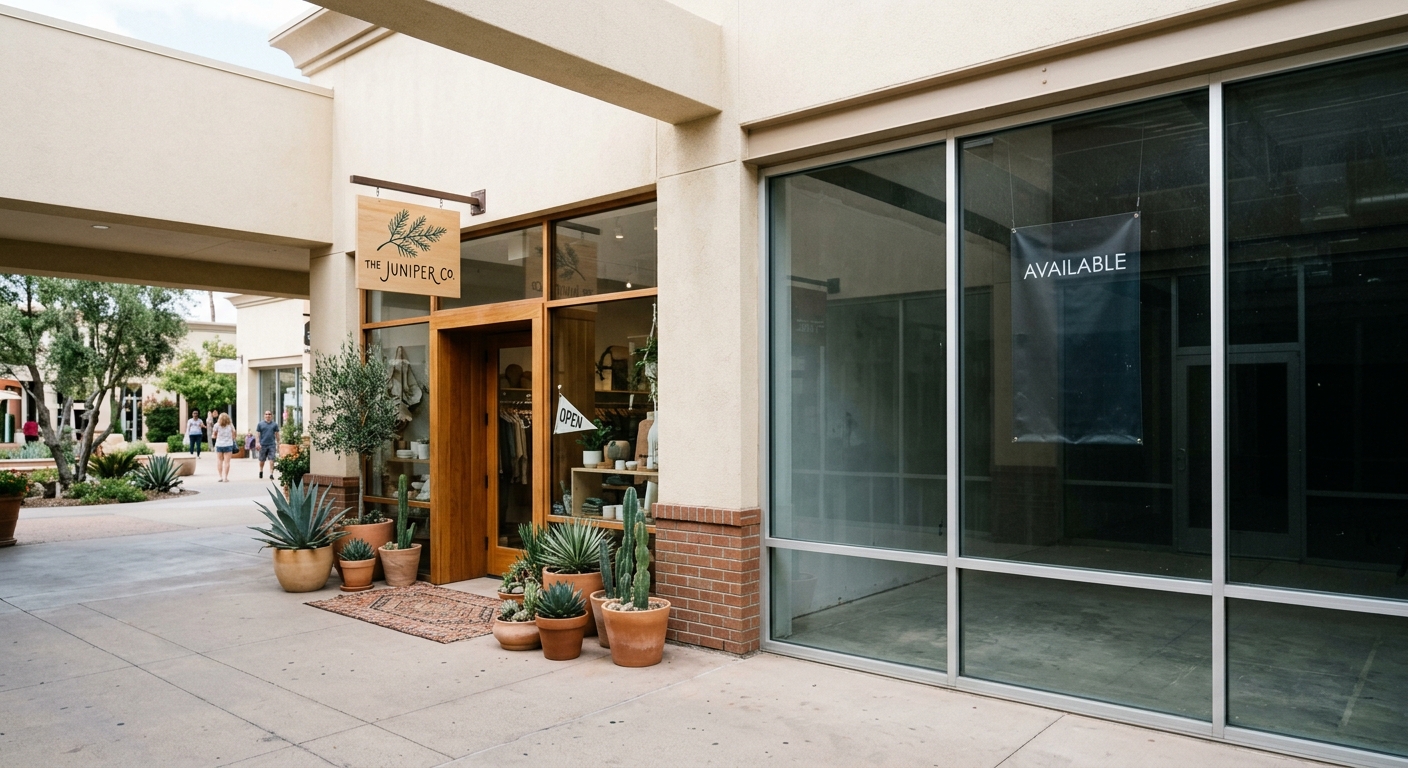
AI-generated illustration; not a photograph of the reported event.
- calendar_today October 14, 2026
Retail Mall Vacancy Creates New Prospects for Small Businesses
As shopping centers face rising vacancy rates and softer demand, small businesses across the country are securing opportunities in retail real estate that were previously unattainable. The shifting commercial property landscape is benefitting entrepreneurs, independent retailers, and service providers.
Favorable Lease Terms Open Doors in Shopping Centers
Kimberly Blair, a wellness practitioner in San Diego, transitioned from virtual counseling to a physical storefront after noticing increased screen fatigue among her clients. Her search for commercial space revealed abundant options and unexpectedly favorable lease terms, including negotiable monthly rent and flexible lease durations. Blair linked her ability to better serve her clients and gain a competitive advantage directly to these improved real estate offerings.
Across the nation, others like Blair—including health practitioners, yoga instructors, and artists—are gaining access to prime locations in shopping centers. Teresha Aird, co-founder and chief marketing officer at Offices.net, noted a noticeable uptick in small businesses leveraging vacancies in areas that once priced them out. Some of the hardest-hit retail corridors—such as inner-ring suburbs and mid-sized city centers—are now seeing a reset in leasing activity, opening space for independent retailers and service-based businesses.
Rising Vacancy Rates and Softer Rent Increases in Retail Real Estate
According to Cushman & Wakefield, national vacancy rates in shopping centers climbed to 5.8% in the second quarter of 2025—a notable increase compared to prior periods. The overall softening in demand is easing upward pressure on asking rents across shopping centers and retail malls. Although rental rates for commercial space continue to rise, the pace has slowed: rates increased by approximately 2% annually, compared to 4% post-pandemic. This flattening, alongside increasing vacancies, is creating entry points for small businesses and new types of tenants, such as medical offices and spas.
Elizabeth Lafontaine of Placer.ai observed that these dynamics are especially advantageous for non-traditional tenants. The current environment allows local retailers and independent boutiques to flourish in a market once dominated by national chains.
Changing Strategies: Flexibility and Innovation in Commercial Leasing
Small business owners are increasingly capitalizing on short-term lease arrangements, flexible lease terms, and even periodic rent-free incentives. This new approach provides the option to test retail locations without committing substantial capital, a flexibility rarely available before. Some landlords, in partnership with local councils, are offering pop-up programs and revenue-sharing agreements to keep units occupied and reduce property vacancies.
Andy LaPointe, owner of Traverse Bay Farms in Michigan, described how small businesses can transform formerly generic retail spaces into vibrant community destinations. He believes that local entrepreneurs bring uniqueness and a sense of belonging that differ from the standardized presence of national brands.
Geographic Variability: Opportunity Depends on the Market
Experts caution that the availability of advantageous lease terms and access to commercial space depend heavily on location. In thriving urban areas with high demand for warehousing and industrial space, such as around New York City, the value of vacant property remains high, reducing chances for small business deals. In contrast, in regions where big-box stores have folded and there is less alternative demand, small businesses can flourish—provided landlords offer manageable lease agreements and avoid burdensome terms like triple net leases.
In West Des Moines, a family-owned restaurant was recently able to lease a former chain pizzeria location at nearly 30% below the original asking price, further aided by tenant improvement allowances. These types of deals are a marked departure from just a few years ago.
Challenges Remain for Small Businesses and Landlords
Despite increased accessibility, high small business failure rates remain a risk for landlords. According to Glenn Brill of FTI Consulting, more than half of small businesses do not survive beyond six years, prompting some property owners to wait for "credit tenants"—larger, more stable chains that can guarantee long leases and advance rent. However, as these tenants become scarce, strip malls and smaller shopping centers offer realistic entry points for local entrepreneurs—if the local economic climate supports retail and service demand.
Source: cnbc.com.


