- calendar_today September 1, 2025
Long connected with cars, motorcycles, and robotics, Honda has quietly entered the space technology scene. Completing its first successful launch and landing test of a reusable experimental rocket, the company is preparing the ground for a future far beyond the automotive sphere.
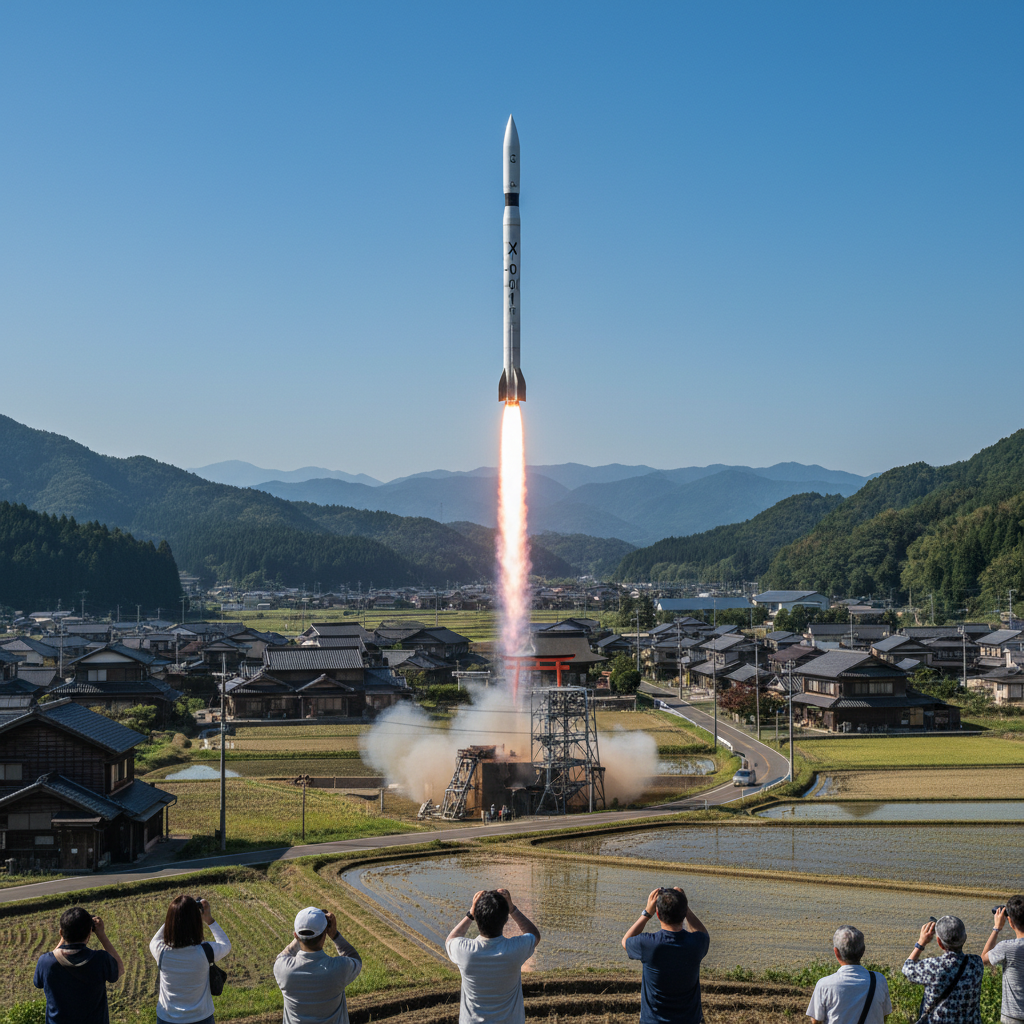
The test took place in Taiki Town, a small area of Japan that has been progressively rising in reputation as a “space town.” Supported by local government initiatives as well as joint ventures with companies like JAXA, the region has developed into a rising hub for aerospace industry. Here Honda’s rocket launched off, soared to 890 feet, and landed just 37 centimeters from its intended position—a stunning degree of accuracy for a debut test.
Reaching its peak height before descending and touching down on four retractable legs, which also gave support during liftoff, the rocket stayed in the air for 56.6 seconds. Rising almost twenty-one feet tall and weighing more than two,800 pounds, the car displayed a well calibrated mix between control, stability, and structure.
A Technological Cross-Over
The way Honda is using its non-aerospace knowledge makes this development particularly fascinating. The company has not started this project from nothing. Rather, it has been adjusting and implementing systems from other industries, especially in robotics and autonomous driving.
These technologies are enabling the rocket to accomplish vertical takeoff coordination, landing accuracy, and trajectory control. Basically, the company is honing the logic and response systems applied in self-driving cars for use in aircraft. As Honda advances into space-related innovation, that crossover might turn into one of its strongest suit.
Though its flight seems fleeting, the rocket represents a change in Honda’s long-term perspective. This is not only a test. It’s part of a well considered strategy to enable suborbital launch by 2029.
Glancing Toward the Brink of Space
Key stepping stones in space exploration are suborbital launches—those that pass the Kármán line, roughly 100 kilometers above sea level but do not enter orbit. Without the expense and complexity of complete orbital missions, they let businesses test systems, compile flight data, and advance rocket technologies.
Honda’s present project is still in the basic research stage; decisions about when or whether the rocket will turn into a commercial product have not been taken yet. Still, the more general plan is obvious. Honda is looking at ways to support the increasing demand for satellites and space-based infrastructure, maybe deploying hardware for data services, navigation, and communication using its own launch systems.
That would fit rather nicely with the other business divisions of the company. Direct support for things like connected cars, autonomous navigation, and logistics platforms comes from satellites; all areas Honda is already heavily investing in.
Entering the launch market at the same time presents major difficulties. Honda would have to drastically increase its rocket capabilities, build more powerful engines, and find sustainable financing for the program if it were to go from suborbital testing to orbital launches—that kind of vehicle able to carry satellites into long-term space paths.
The path is long. But the accuracy and control displayed on this week’s test show Honda is more than qualified to start.
Honda’s presence draws even more attention to Japan’s participation in the worldwide aerospace race as Taiki Town keeps expanding its footprint in space innovation. Though SpaceX, Blue Origin, and Rocket Lab have dominated the news, Honda’s understated but deliberate approach could provide the sector fresh vitality.
It might have began on four wheels. But Honda’s future might just be expressed in kilometers above the planet.