- calendar_today August 20, 2025
.
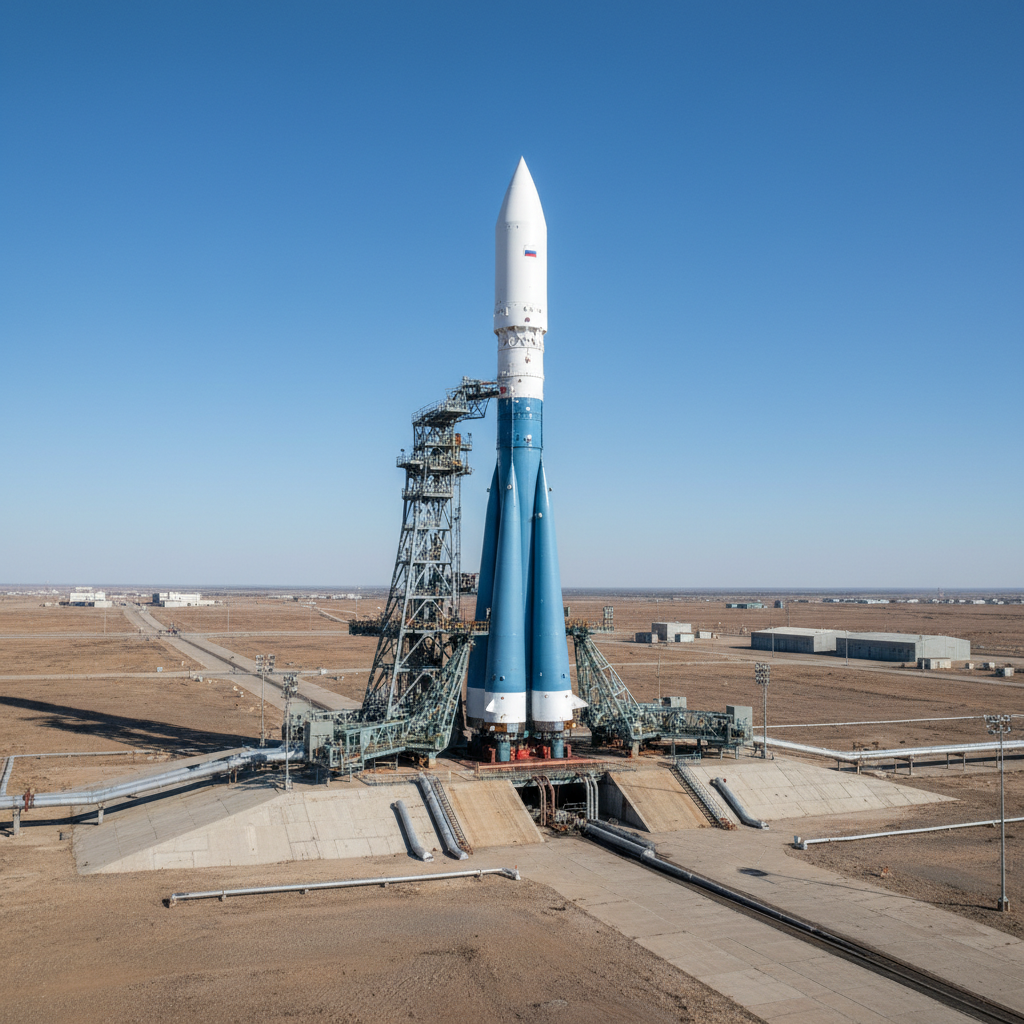
Roscosmos has announced its intention to launch Russia’s newest rocket, the Soyuz-5, before the end of the year. Speaking to TASS, a state media outlet, Roscosmos Director Dmitry Bakanov confirmed the upcoming test flight.
“Yes, we are planning for December,” Bakanov told the publication. “Work on the preparation of the first launch of this rocket is almost ready.” Soyuz-5 will take to the skies from Baikonur in Kazakhstan, if all goes according to plan. A successful flight will mark the first test flight of a vehicle in development for more than a decade. Roscosmos anticipates several trial launches before Soyuz-5 enters service, but it is not expected to reach full operational capacity until 2028.
Soyuz-5’s other name, Irtysh, may be less familiar, but it does not indicate a break with the past. As built, Soyuz-5 is very much the progeny of the Zenit-2 rocket, first unveiled in the 1980s. Zenit was a product of the Yuzhnoye Design Bureau, which is based in Ukraine. These rockets were manufactured in Ukraine, but depended on Russia for a critical component: the RD-171 engine. Zenit was, in a sense, an example of post-Soviet cooperation in the aerospace industry. Russia ended that partnership with the invasion of Ukraine in February 2022, and by the end of 2023 had even struck the plant that once built Zenit vehicles.
Soyuz-5 can be considered a domestic, made-in-Russia variant of Zenit. By reworking the Russian-Ukrainian rocket, Roscosmos and Rostec have effectively pushed Ukraine out of the equation and removed their most significant remaining dependence. Moscow no doubt sees that change as a win for national security and independence, and for the Russian space industry, an opportunity to displace an aging workhorse: the Proton-M launcher.
Bridging Generations
For all the political and symbolic significance of Soyuz-5, from an engineering perspective, it is a medium-lift rocket. Soyuz-5 can deliver approximately 17 metric tons to low-Earth orbit, according to its developer, Rostec. The rocket achieves this performance thanks to slightly larger propellant tanks than Zenit, a rocket with a similar height and diameter.
The centerpiece of the engine is the RD-171MV, the newest member of a long line of rocket engines. This design dates to the Energia rocket, developed in the 1980s to power the Soviet space shuttle, Buran. The Soviet Union flew Buran just four times before the program was shuttered, but RD-171 and its derivatives live on. The RD-171MV’s claim to fame is that it uses no Ukrainian parts in its construction. Burning kerosene and liquid oxygen, the engine produces more than three times the thrust of NASA’s Space Shuttle main engine, and is the most powerful liquid-fueled rocket engine in operation today.
That said, Soyuz-5 itself is an expendable rocket. Its main competitors, most notably SpaceX’s Falcon 9, are designed to be reused, even if the reality of those plans has often been more complicated in practice. That difference alone raises questions about the international market for Soyuz-5, even if a domestic one exists.
Yet the rocket remains important to Roscosmos. The war and associated costs and sanctions have left Rostec with limited funds, making it all but impossible to design a completely new, reusable rocket from scratch. The Amur project, or Soyuz-7, has been intended to fill that need. Equipped with reusable first stage and methane-fueled engines, Amur may one day be able to challenge SpaceX on cost. But the design has faced repeated delays, and its initial launch is not expected before 2030 at the earliest.
Soyuz-5 is a bridge. It lets Russia, and Roscosmos in particular, keep the wheels of the national space program in motion, even if the machinery comes from the Soviet past.
On the other hand, the commercial outlook for Soyuz-5 is not at all clear. In the last decade, the global launch industry has evolved. The arrival of SpaceX, along with Chinese providers, has fundamentally reshaped the market, providing customers with cheaper and more flexible services. Russia, for its part, continues to operate both Soyuz-2, which it fields for crewed launches, and the Angara family of rockets, for more massive payloads. Neither family, however, has gained a strong international foothold. Soyuz-5 could break that pattern, but it is far from certain.
If nothing else, bringing Soyuz-5 to the launch pad under current conditions is itself something of an achievement. A successful launch in December would show that Russia, even with sanctions and budget shortfalls, can still field new hardware.
Soyuz-5 is unlikely to turn the established physics of rocket design on its head. But in Russian terms, it still matters. It is a milestone on the road to independence from foreign technology and industrial know-how, and a bridge to the future, whether that comes in the form of Amur, or another generation of rockets that may still be on the drawing board.