- calendar_today August 13, 2025
In 2025, Nevada’s commercial real estate (CRE) market is emerging as one of the most dynamic in the western U.S. While Las Vegas still dominates headlines with mega-resorts and entertainment venues, the real story extends far beyond the Strip. From Reno to Henderson, and from logistics hubs to multifamily housing booms, Nevada’s growth is fueling a broad-based CRE resurgence.
Fueled by strong migration patterns, business incentives, and a diverse economic push, the Silver State is drawing interest from national developers, institutional investors, and regional players alike. Nevada’s tax-friendly environment, affordable land, and strategic geographic positioning are helping reshape its commercial footprint for the decade ahead.
Population Surge Drives Demand Across Asset Classes
Nevada’s population has surged past 3.3 million in 2025, with growth led by Clark and Washoe counties. Las Vegas and Reno remain magnets for Californians and remote workers seeking lower costs and higher quality of life.
This migration is accelerating demand for nearly every commercial real estate category—especially industrial parks, healthcare centers, retail plazas, and multifamily communities. Suburban areas like Sparks, North Las Vegas, and Henderson are rapidly absorbing new inventory, while state and local governments are investing heavily in transportation and infrastructure to keep up.
Industrial: The Crown Jewel of Nevada CRE
The industrial sector remains Nevada’s top-performing CRE asset class in 2025. As global supply chains recalibrate, Nevada’s proximity to major West Coast ports and highways, combined with business-friendly policies, has made it a preferred logistics hub.
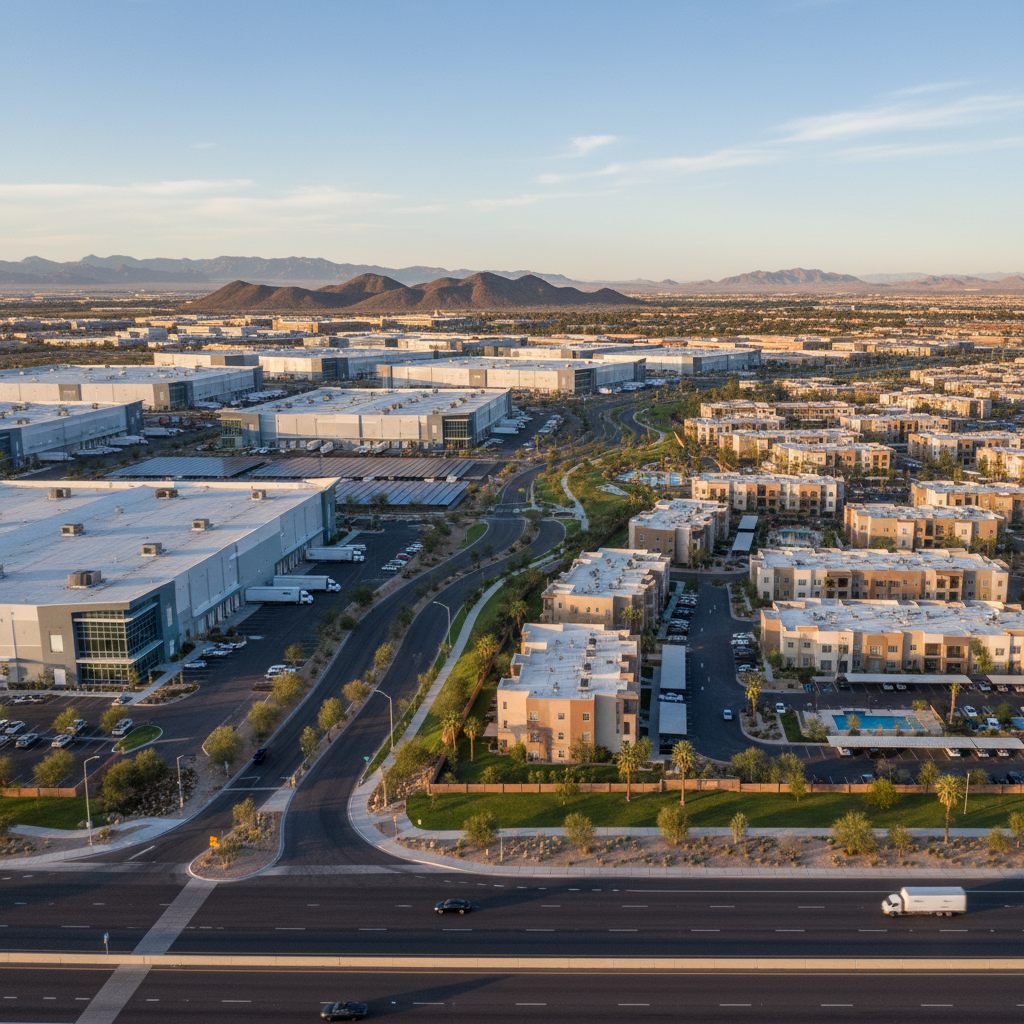
Southern Nevada is seeing continued growth in warehouse and fulfillment centers, especially near the I-15 and I-215 corridors. Vacancy rates hover around 3.8%, and rents are rising steadily due to limited new supply and strong pre-leasing activity.
In Northern Nevada, the Tahoe-Reno Industrial Center (TRIC) continues to expand, with major tenants like Tesla, Walmart, and Panasonic driving investment. Demand for distribution space and data centers is especially high around Reno-Sparks, where the region’s intermodal access and proximity to California markets are unmatched.
Multifamily: Growing Strong with Urban and Suburban Appeal
Multifamily housing continues to be a cornerstone of Nevada’s real estate development pipeline. In 2025, rents remain relatively affordable compared to national averages, attracting young professionals, retirees, and families priced out of coastal cities.
In Reno, downtown revitalization and university expansion are supporting mid-rise apartments and mixed-use developments. Projects along Virginia Street and in the Midtown district are helping the city grow upward rather than outward.
Meanwhile, in Las Vegas, submarkets like Henderson, Centennial Hills, and Southern Highlands are seeing rapid multifamily construction, particularly build-to-rent (BTR) communities designed for long-term renters who desire suburban amenities without homeownership costs.
Overall, statewide occupancy remains above 94%, with rent growth stabilizing after pandemic-era surges but still outperforming inflation in many metro areas.
Office Market: Flight to Quality Reshapes the Sector
Nevada’s office market in 2025 is a tale of two cities—literally and figuratively. Traditional downtown office space in Reno and Las Vegas has struggled with hybrid work trends, pushing vacancy rates above 20% in some areas. However, the sector is not static.
In both Northern and Southern Nevada, demand is growing for high-quality, energy-efficient, and amenity-rich office campuses. Suburban nodes—like Summerlin in Las Vegas and South Reno—are drawing tenants in finance, insurance, tech, and medical services seeking smaller, flexible footprints.
The medical office segment is particularly strong, as population growth fuels healthcare demand. New outpatient facilities and wellness centers are under development across Clark and Washoe counties.
Retail: Revitalized by Suburban Growth and Experience
While brick-and-mortar retail remains in flux nationally, Nevada’s retail landscape is adapting with resilience. Experiential retail is thriving on the Las Vegas Strip and in tourist-heavy zones of Reno, but the real momentum in 2025 is in local lifestyle centers and neighborhood-serving retail.
In Las Vegas, developments like UnCommons and Durango Casino Resort are redefining suburban mixed-use projects with curated dining, boutique shops, and wellness studios.
In Northern Nevada, retail clusters near new housing communities in Spanish Springs, South Reno, and Damonte Ranch are absorbing demand from both national chains and local entrepreneurs.
Meanwhile, developers are integrating medical, grocery, and fitness tenants into traditional shopping centers, aligning with consumer preference for convenience-focused destinations.
Hospitality and Tourism: Still a Key Economic Pillar
Las Vegas and Reno are both tourism-heavy economies, and in 2025, visitor numbers are recovering impressively. Las Vegas alone is projected to see over 41 million visitors, helping stabilize hotel and resort properties. Major venues like the Fontainebleau, MSG Sphere, and Durango Casino are drawing both tourists and CRE investors.
In Reno, regional tourism is being buoyed by the expansion of special events, skiing, and outdoor recreation. Boutique hotels and event spaces are increasingly popular investment targets near Midtown and the Truckee River.
Short-term rental regulations have been clarified in many counties, which is helping the hybrid hospitality-residential segment gain traction with investors and developers.
Government Incentives and Pro-Business Climate Attract Investors
Nevada remains a no-income-tax state with no corporate income tax, making it highly appealing for businesses and real estate investors. The Governor’s Office of Economic Development (GOED) continues to offer incentives for advanced manufacturing, clean energy, logistics, and film production.
Opportunity Zones in both urban and rural counties remain active, attracting long-term investors interested in tax-advantaged development. Infrastructure upgrades—including road expansions, EV charging corridors, and broadband access in rural counties—are also supporting broader geographic investment beyond Reno and Las Vegas.
Sustainable CRE and Green Innovation Rising
Sustainability has become a defining feature of new developments across Nevada. In response to climate concerns and water scarcity, CRE developers are investing in solar-integrated facilities, EV-ready properties, low-water landscaping, and LEED-certified buildings.
Reno’s West 2nd District and Las Vegas’ Matter Park developments exemplify this shift, combining green building technologies with walkable urban design.
Across the state, utility-scale solar and battery projects are also creating new demand for energy-sector CRE, including land leases, control centers, and worker housing.
Outlook: A Strong Hand for Nevada’s CRE in 2025
Nevada’s commercial real estate market is performing strongly in 2025 across multiple sectors, driven by demographic momentum, economic diversification, and investor-friendly policy. While national headwinds like construction costs and interest rates remain, the state’s fundamentals—population growth, geographic advantage, and tax climate—continue to support CRE expansion.
Whether it’s industrial innovation in Reno, multifamily growth in Henderson, or retail reinvention in Las Vegas, Nevada is proving it can bet big on a future beyond the casino floor.