- calendar_today August 10, 2025
The imposition of sweeping tariffs in April 2025—chiefly a 104% tariff on Chinese imports and a 25% levy on foreign automobiles—has stirred up economic uncertainty nationwide. In Nevada, a state traditionally anchored by tourism but increasingly invested in tech, logistics, and manufacturing, the impact has been broad and deep.
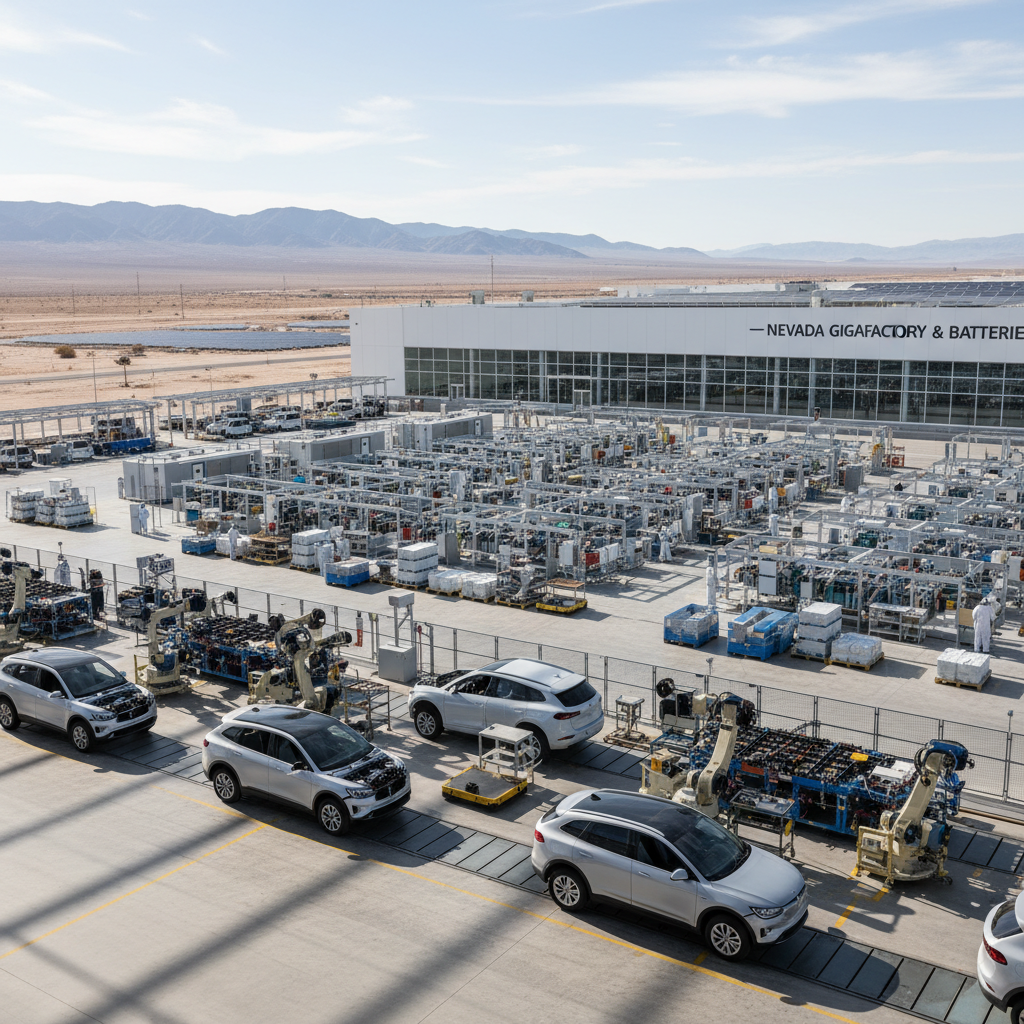
What’s striking is how the effects vary across sectors. From Tesla’s Gigafactory near Reno to ranchers in Elko County and hotel operators along the Las Vegas Strip, businesses are rethinking strategies, adjusting prices, and, in some cases, accelerating long-discussed diversification plans.
Manufacturing: A Double-Edged Sword
Nevada’s manufacturing industry has grown steadily over the past decade, buoyed by investments from companies like Panasonic, Haas Automation, and Tesla. With over 67,000 residents employed in manufacturing as of Q1 2025, it’s now a vital part of the state’s economic fabric (Bureau of Labor Statistics).
The recent expansion of Tesla’s Gigafactory—with a $3.6 billion commitment to increase EV truck and battery production—demonstrates the state’s potential as a tech-forward manufacturing hub (AP News, Jan 2025). However, supply chains are straining under the cost of imported electronics and raw materials. For smaller firms, the 2025 tariffs have turned sourcing challenges into existential concerns.
“Metal prices, battery components—everything’s gone up,” said a senior production manager at a Sparks-based component supplier. “We’re absorbing some of the cost, but we can’t do that forever.”
Agriculture Under Pressure
Nevada may not top the list of U.S. agricultural states, but its rural counties contribute significantly through hay, cattle, and dairy production. Much of that is sold beyond state borders—and increasingly, overseas.
Following China’s 34% retaliatory tariff on U.S. agricultural products, Nevada farmers are bracing for tighter margins and unpredictable demand. According to the Nevada Department of Agriculture, hay exports to Asia have already slowed by 15% since the tariffs were announced.
To make matters worse, the USDA’s cancellation of funding for locally grown food programs this spring removed a buffer that helped farmers weather past export dips.
Some producers are pivoting toward domestic buyers and exploring controlled-environment agriculture (CEA). The Indoor Ag-Con conference in Las Vegas has seen record attendance, reflecting growing interest in vertical farming and sustainable food systems tailored to Nevada’s climate.
Tourism: The Strip Feels the Squeeze
Perhaps nowhere is the ripple effect more visible than in Las Vegas. The city’s economy still leans heavily on global tourism and event-based hospitality. While domestic travel remains steady, international visitation dropped 12% in March 2025 year-over-year, according to the Las Vegas Convention and Visitors Authority.
Hoteliers are reporting thinner margins as supply chain disruptions push up the costs of imported liquor, furnishings, and food ingredients. Meanwhile, concerns about stagflation—a mix of inflation and stagnant growth—have prompted cautious hiring among casino operators.
“Even a small drop in visitor volume translates to millions lost in revenue,” said a senior VP at one of the city’s largest resort groups. “It’s forcing us to become leaner, faster.”
Consumer Costs and Construction Slowdowns
Nevadans across the state are also feeling the effects at the register. From Carson City to Henderson, residents have noticed price hikes on everything from imported electronics to everyday grocery items. The Nevada Retail Association reports a 4.5% jump in average retail pricing since February.
Construction—a backbone of Nevada’s growth—has been hampered as well. Developers in Reno and Las Vegas face higher costs for steel, tiles, and electrical systems, many of which are imported. Projects already underway are continuing, but new developments are being approached more conservatively.
Strategic Shifts: A Search for Stability
To adapt, Nevada is leaning into long-term strategies that focus on economic resilience:
- Clean Energy Expansion: Projects like the Reid Gardner Battery Energy Storage System near Moapa are part of a broader push toward sustainable infrastructure and local power generation.
- Workforce Development: Institutions across the state are ramping up technical training in advanced manufacturing, clean energy, and logistics to meet demand for skilled labor and reduce dependence on volatile sectors.
- Supply Chain Localization: State officials are working with chambers of commerce to encourage nearshoring and local sourcing—particularly for sectors vulnerable to global market swings.
Adapting to a New Normal
The landscape isn’t bleak—but it is uncertain. While the tariff regime has triggered short-term disruption, it’s also catalyzing conversations that Nevada’s business leaders have long advocated: how to diversify, modernize, and insulate the economy from external shocks.
Investors are now turning to sectors with perceived long-term security: renewable energy, regional manufacturing, real estate with local supply chains, and logistics infrastructure. The economic playbook is being rewritten—slowly, but deliberately.