- calendar_today August 14, 2025
Nevada’s real estate market in 2025 is defined by shifting migration patterns, cooling interest rates, and an economy gradually diversifying beyond gaming. As investor sentiment stabilizes, buyers and developers across Las Vegas, Reno, and the I-80 corridor are adjusting their focus—from fast gains to consistent returns and demographic alignment.
Which asset types are leading the charge this year? From suburban rental homes to logistics-driven industrial spaces, seven real estate sectors are emerging as top choices for Nevada investors. Each is navigating macroeconomic headwinds while evolving in ways that suit the state’s fast-changing landscape.
Multifamily Housing: The Reliable Performer
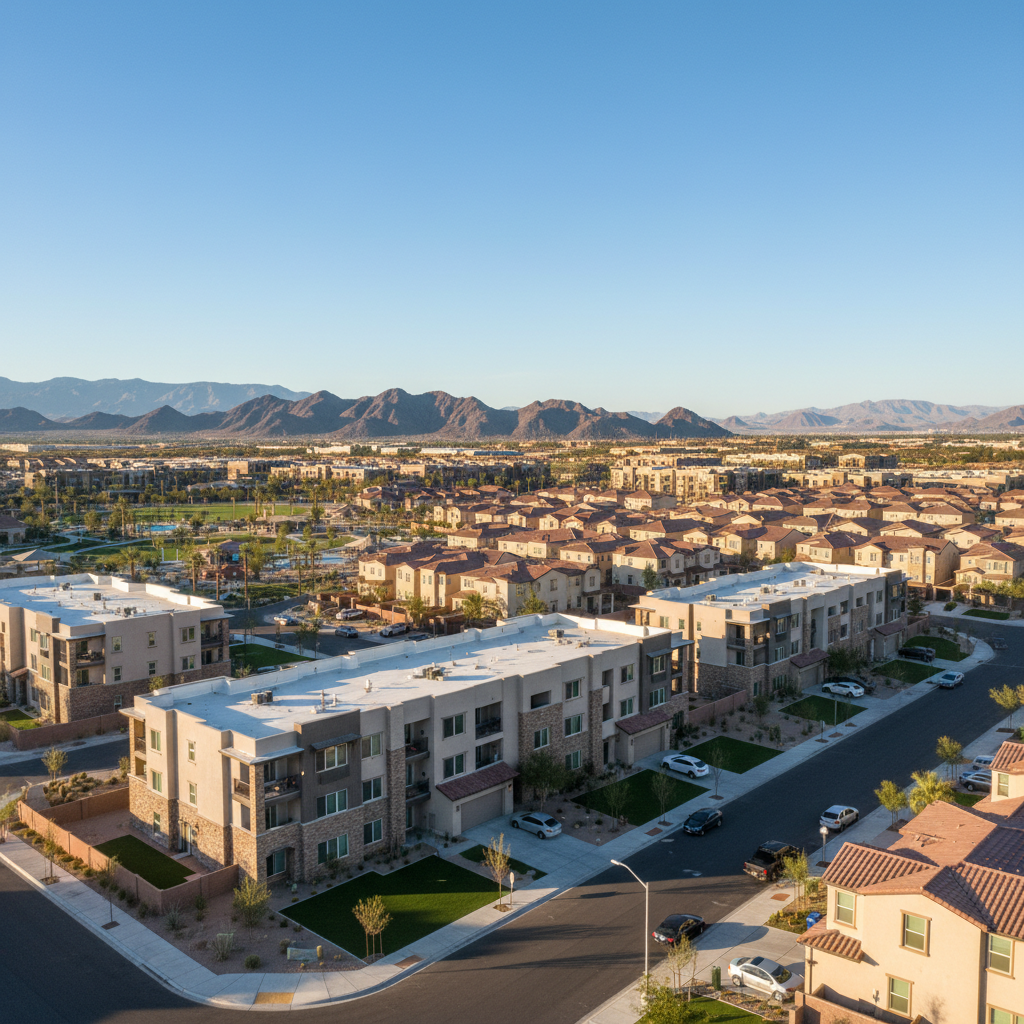
Multifamily housing continues to anchor Nevada’s residential market, especially in Clark and Washoe counties. With home prices still elevated and borrowing costs outpacing wage growth, many renters are staying put. Class B and C apartments in areas like Henderson, Sparks, and North Las Vegas are seeing occupancy rates near 95%, according to local brokerage data.
Mid-rise complexes and build-to-rent communities are thriving. Developers and landlords are offering quality-of-life perks—pools, gyms, and smart-home features—without the financial barriers of homeownership. In return, rent growth is holding steady around 3–4% annually, especially in transit-accessible and employment-adjacent neighborhoods.
Industrial Properties: Still a Growth Engine
Industrial real estate in Nevada continues to outperform, fueled by e-commerce, logistics, and tech-sector growth. Las Vegas’ southwest submarket and the Reno-Sparks industrial corridor are hotbeds for warehouse development, with vacancy rates hovering below 4%.
According to JLL’s Q2 2025 data, industrial rents in Nevada rose over 6% year-over-year. Distribution centers, data facilities, and cold storage units are seeing especially strong demand. Tesla’s ongoing expansion in Northern Nevada and the rise of AI-driven logistics are also attracting REITs and institutional buyers looking to lock in long-term value.
Single-Family Rentals in Suburban Markets
The demand for single-family rentals (SFRs) remains robust in Nevada’s suburban areas. Many working families are opting out of homeownership due to down payment hurdles and rate sensitivity—but still want space, privacy, and access to good schools.
In cities like Summerlin, Spanish Springs, and Fernley, detached rentals are seeing low vacancy and stable tenants. Roofstock’s 2025 Investor Sentiment Index shows that over 60% of investors in the Southwest plan to grow their SFR portfolios, with Nevada ranking among the top target states. For landlords, these properties offer predictable income and less turnover than high-density housing.
Migration Patterns: Las Vegas Still Booming, But Reno Rises
Las Vegas remains one of the fastest-growing metro areas in the country, drawing new residents from California, Arizona, and the Pacific Northwest. Affordability (relative to nearby states), tax advantages, and climate appeal continue to fuel this growth.
However, Reno is increasingly on investors’ radar. With a diversified economy including tech, advanced manufacturing, and higher education, Reno is shaking off its casino-town reputation. The surrounding areas—from Carson City to Sparks—are drawing interest for both residential and commercial projects tied to long-term job growth.
Mixed-Use Developments & Urban Revival
Downtown Las Vegas and parts of Reno are experiencing a revival, with mixed-use developments bringing together residential, retail, and office elements. In Las Vegas’ Arts District and Reno’s Midtown, walkable neighborhoods are attracting millennials and digital nomads alike.
Though development hurdles remain—especially around zoning and infrastructure—investors who embrace placemaking and lifestyle-oriented amenities are finding long-term value. These communities emphasize convenience, culture, and connection—qualities increasingly prized by renters and young professionals.
Niche Assets on the Rise: Senior & Student Housing
Senior housing is gaining ground in Nevada, particularly in warmer, retiree-friendly areas like Mesquite, Pahrump, and parts of Henderson. According to NIC MAP Vision, occupancy is climbing across independent and assisted living properties. Nevada’s low taxes and dry climate make it a magnet for older adults seeking affordability and health-conscious living.
Student housing, meanwhile, is strong in university towns like Reno and Las Vegas. With enrollment rebounding at UNLV and UNR, student pre-leasing rates are nearing 90%. Modern units with Wi-Fi, community areas, and furnished options are in high demand—presenting solid opportunities for developers who can deliver lifestyle-aligned housing at scale.
Risk Factors and Investment Cautions
Nevada’s investment environment is not without risks. Rising insurance premiums—especially for properties in wildfire zones near the California border—are a growing concern. Meanwhile, water scarcity and energy infrastructure constraints are longer-term considerations in high-growth corridors.
Regulatory stability is a relative strength in Nevada, but developers in urban cores still face permitting delays and land-use complexity. Additionally, while interest rates have stabilized, borrowing remains costlier than before 2022. This can squeeze margins on highly leveraged or speculative projects.
As always, hyperlocal insight is key—understanding how each zip code behaves can make the difference between an underperforming and a top-tier asset.
Expert Insight: What the Analysts Say
“Las Vegas still dominates attention, but savvy investors are looking at Northern Nevada for growth backed by industry and logistics,” says Lauren Bellingham, a senior economist with CBRE. “The state’s strength lies in its diversity—not just in property types, but in market behavior.”
Redfin’s 2025 Housing Trends report adds that population movement, affordability, and job availability are key to the state’s real estate trajectory. Nevada offers the rare mix of landlord-friendly policies, job growth, and climate appeal—but precision is essential.
Strategic Diversification is Key in 2025
In Nevada’s 2025 real estate landscape, the most successful investors are those who blend long-term thinking with geographic and sectoral diversity. Multifamily housing remains solid in urban and suburban pockets. Industrial continues to thrive in Reno and Las Vegas corridors. SFRs are winning in family-friendly towns with expanding job bases.
Mixed-use urban revival projects are making downtowns livable again, while senior and student housing offer reliable, demographic-driven returns. The gap between overbuilt and undersupplied areas is growing—making timing and location more important than ever.
By focusing on diversified assets tied to how Nevadans live, work, and age, investors can better position themselves in a state that rewards strategic insight and regional awareness.