- calendar_today September 1, 2025
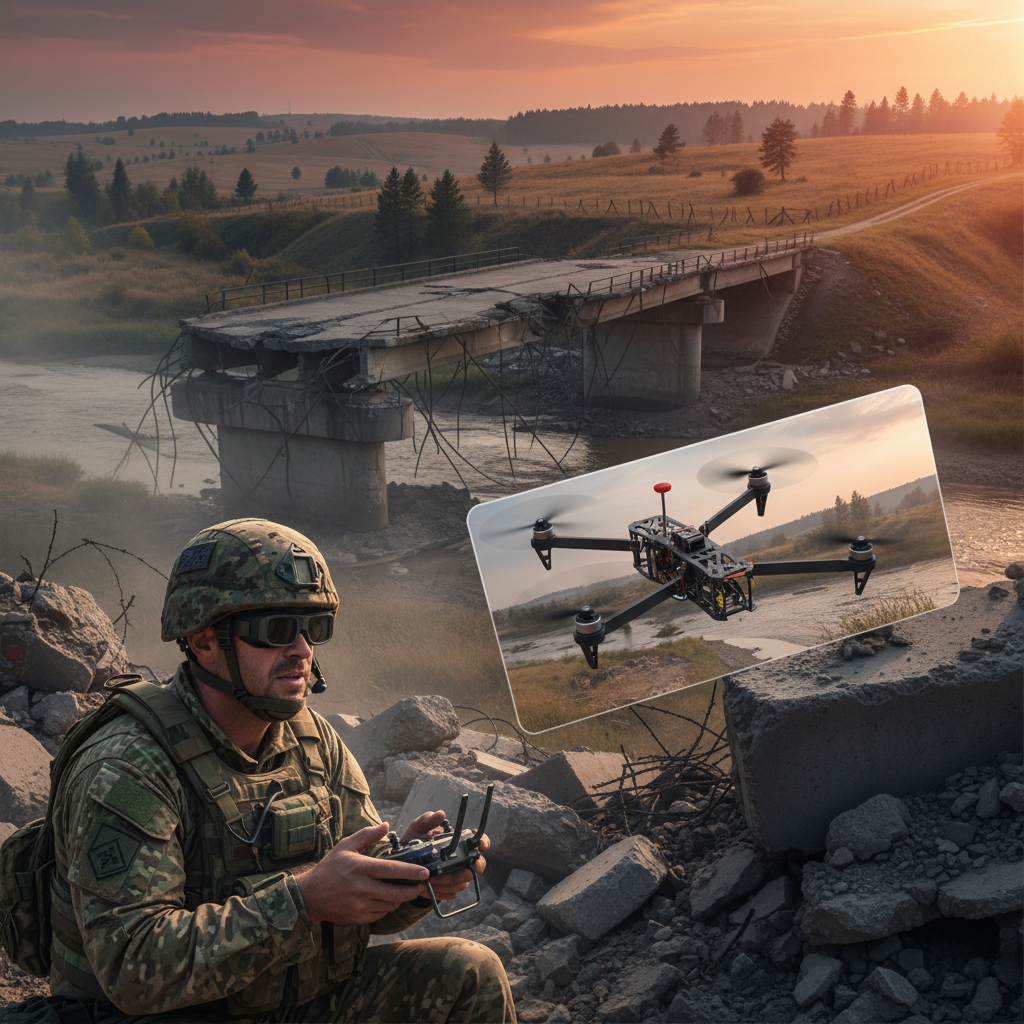
A pair of bridges inside Russia’s Belgorod region have been blown up in daring strikes by Ukrainian forces, which showed how affordable first-person-view (FPV) drones are being used to great effect in the war in Ukraine. The two attacks were carried out by the 58th Separate Motorized Infantry Brigade, which targeted Russian mines and ammunition under the bridges near the border with Ukraine’s Kharkiv region.
The drones used in the operation cost the unit between $600 and $725 each, a fraction of the price of the high-tech weapons typically used to strike such targets.
The two bridges “were used for the delivery of ammunition and supply of the occupied territories,” the Ukrainian 58th Brigade said in a statement.
The Russian military had mined the bridges and were planning to blow them up if needed, a Ukrainian military official told CNN. Bridges were an obvious target because they would be mined if Ukrainian forces moved to break through the frontlines, Ukrainian officials said. At some point in the future, Kyiv may decide to do just that.
In a similar move, Ukraine destroyed several bridges leading toward the capital Kyiv to slow Moscow’s advance and protect the city in the first days of Russia’s full-scale invasion in February 2022.
Operational Around Russians
The Ukrainian 58th Brigade said it first grew suspicious of the bridge after observing “some unusual activity” on one of the two structures. Because normal drones and unmanned aerial vehicles (UAVs) had problems operating under the bridges, standard drones would lose contact with their operators and have to return to base. The brigade, however, had an FPV drone equipped with fiber optics that allowed it to remain in contact with the operator without interfering with signals under the bridge.
“Under the bridge, we saw the enemy’s ammunition, including anti-tank mines. We saw the mines, and we struck,” a representative of the brigade told CNN.
A drone that the unit had on hand approached the first bridge in question, a video shows, before the explosives it carried were set off in a massive blast. A second camera placed at a distance also captured the explosion.
CNN geolocated the location of the bridge to the Belgorod region of Russia, near the Ukrainian border with Kharkiv. After the success of that first attack, the unit checked the other bridge and determined that it, too, was mined. Another drone was deployed and another powerful explosion occurred.
“Seeing an opportunity to stop the ammunition supplies of the Russians, we took it,” the 58th Brigade said.
Analyst Mykola Bielieskov said that in addition to being relatively inexpensive, the drones can be used to great effect, even if the enemy is aware of their presence. “These types of operations show how even modest technology can achieve outsized results when used creatively,” he said.
Saving Western Artillery
In other words, using UAVs and FPV drones to find targets allows Ukraine to attack inside Russian territory without wasting high-tech Western weapons, which are in short supply. Ukraine has also made effective use of its HIMARS systems, which have been used to destroy infrastructure deep inside Russia. HIMARS launchers themselves cost millions of dollars, while each rocket costs tens of thousands.
Drones Worth the Price of a Smartphone
Ukraine has repeatedly used small drones to great effect in combat, including by smuggling them close to Russian airfields and setting them off to destroy or damage dozens of aircraft. In that case, drones were especially effective because they were able to reach targets without being detected, despite Russia’s advanced air defenses.
Other uses include packing drones with explosives and using them for kamikaze attacks or destroying Russian air defense equipment. One Ukrainian has even been credited with manually guiding small drones through commercial software to turn them into guided missiles with a degree of accuracy that exceeded military-grade systems.
Analysts say that more high-tech weapons may arrive in Ukraine, including tanks, in the future. But for now, creative tactics and inexpensive drones are key weapons in Kyiv’s arsenal.
Moment of Victory for Ukraine
The news comes at a time when Ukraine is also bracing for a Russian advance in the east. In the last 24 hours alone, Moscow has continued its near-daily missile and drone strikes on Ukrainian cities. It has also made some gains, though the Kharkiv counteroffensive has come to a virtual standstill in some areas.
In recent weeks, Putin has also been more vocal about not letting up on Russian military operations in Ukraine, even if that means a ceasefire is delayed. Against that backdrop, the news of the Belgorod bridges was a welcome change.
The Russian Ministry of Defense has not commented on the attacks, but it will make it more difficult for Moscow to supply troops in the Belgorod region near the Ukrainian border. The destruction of both bridges will have a particularly significant impact on Russia’s logistics operations, slowing or even stopping supplies to its military.
FPV drones are another example of how Ukraine has innovated under the extreme pressures of a Russia invasion, using everything from drones to shoulder-launched air-defense systems assembled by volunteers with commercial parts and modified for battlefield use.
“They are not high-tech weapons, but on a limited budget, they give us a great result,” the representative of Ukraine’s 58th Brigade said.
FPV drones such as those used in the Belgorod bridge attacks have been so effective that Kyiv also used them on its own infrastructure, setting off the drones to destroy buildings that Russian drones had hit in Kharkiv.