- calendar_today June 27, 2026
Nevada — A comprehensive new study from the University of California, Merced, sheds light on the powerful connection between heat waves and wildfire risk across the Western United States, with significant implications for regions like Nevada. Researchers examined data covering the years 2001 to 2024 and found that heat waves, while representing a small fraction of the season, play a disproportionate role in accelerating wildfire activity.
Heat Waves and Their Outsized Impact
According to the study, heat waves—defined as three or more consecutive days of extreme heat—accounted for just 12% to 15% of warm-season days in the western United States. Yet, these brief periods were responsible for a striking 42% of the total area burned by wildfires over the multiple-decade period. Increases in daily burned areas soared by over 50% during heat waves compared to cooler periods; some western regions reported increases reaching 300%.
Wildfire Activity Intensifies with Heat Events
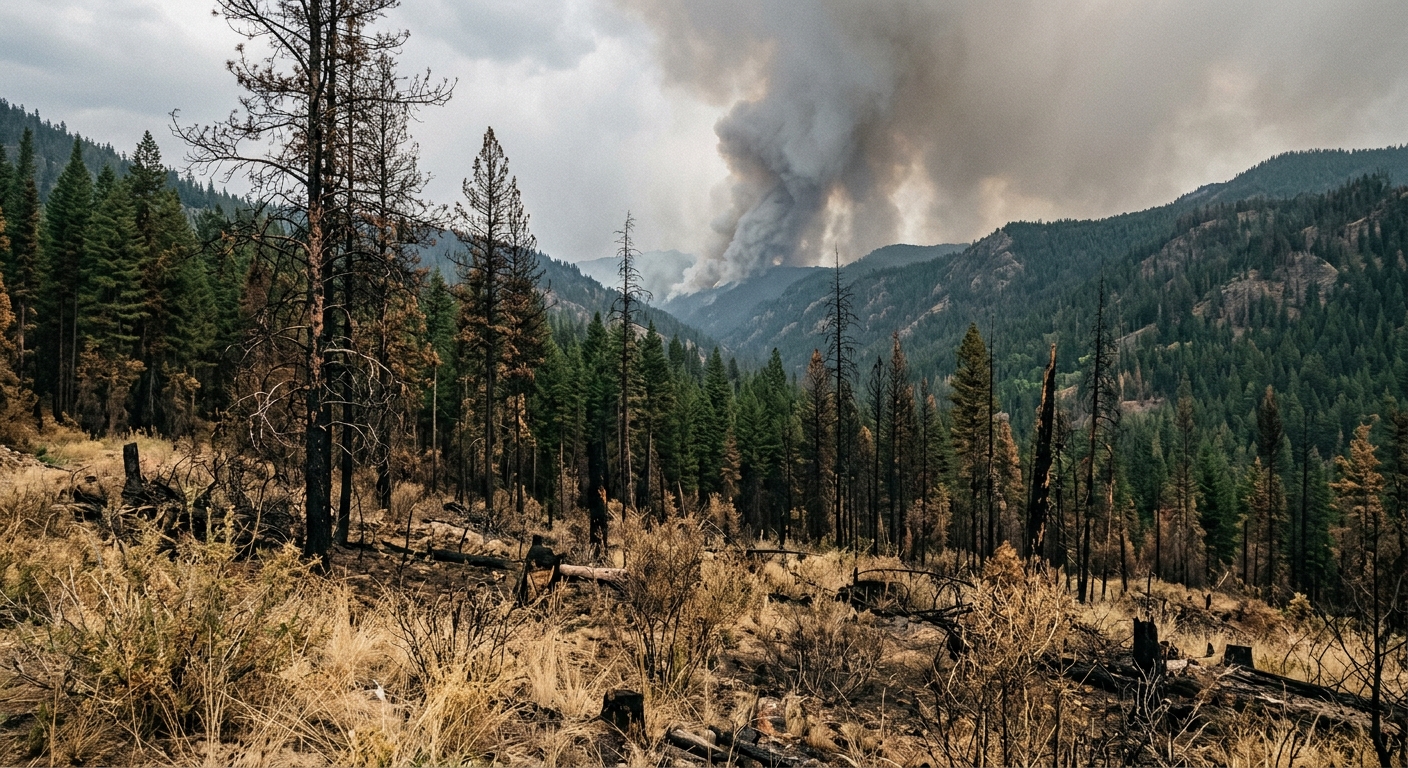
Researchers highlighted that during heat wave days, the combination of elevated temperatures and diminished humidity dries out vegetation rapidly, providing ample fuel for fires. This surge in vegetation dryness extends the window of heightened wildfire risk even after temperatures recede. In forested landscapes, the relationship between heat waves and wildfire activity is most pronounced, severely affecting Nevada’s forested regions as well as other forest-dense areas throughout the western United States.
Key Drivers: Dry Lightning and Prolonged Dryness
Among the compounding factors is the frequency of dry lightning events—lightning strikes that occur without rainfall—during heat waves. These strikes often serve as ignition sources for wildfires, especially when preceded by sustained high temperatures and dry conditions. The reduction in nighttime humidity during heat waves further accelerates vegetation dryness, limiting the natural dampening effect that usually curbs fire spread overnight. Patterns observed in Nevada echo these trends, with local agencies recognizing the increased threat during prolonged heat events.
Trends Tied to Climate Change
The UC Merced report reveals a stark escalation: since 2001, the number of heat wave days in Western U.S. forests has nearly doubled. This dramatic rise correlates closely with a roughly 2.5-fold increase in the overall burned area within these forested environments. While grasslands and shrublands respond more to annual vegetation growth, forest fires have shown a direct and alarming linkage to the frequency of heat waves, raising concerns across Nevada communities as summers become increasingly hot and dry due to climate change.
Regionally Relevant Implications
For Nevada residents and land managers, these findings offer a call to refine wildfire forecasts and prevention strategies. Understanding the clear relationship between heat wave days and increased burned area can help local authorities better allocate resources and issue timely advisories. Incorporating real-time heat wave data into wildfire forecasts could significantly improve the predictive power for severe fire events, especially as both temperature extremes and wildfire risk trend upward in the region.
Integrating New Data into Wildfire Management
The study’s authors advocate for the integration of heat wave monitoring into established wildfire forecast models. As Nevada and neighboring states brace for hotter and longer summers, such advances may prove pivotal in reducing losses from destructive forest fires and safeguarding vulnerable communities across the western United States. Local initiatives—whether through the forestry departments, public safety agencies, or collaborative research with institutions like the University of Nevada, Reno—may leverage these insights to stay ahead of intensifying wildfire threats.
Looking Ahead for Nevada and the West
With climate change fueling longer periods of extreme heat, experts across Nevada are prioritizing research and adaptive strategies to counteract the mounting dangers from wildfires. The University of California, Merced report underscores the urgency for regional resilience, highlighting the ongoing commitment needed from both public agencies and Nevada’s residents to respond to evolving wildfire patterns shaped by increasing heat wave days, intensified wildfire activity, and persistent vegetation dryness. Enhanced wildfire forecasts remain a key tool for the path forward.